Unveiled … the world’s first floating golf course
Estimated reading time 2 min
AquaNine, the world’s first floating golf course, has been unveiled by EIGCA Member, Ben Stephens, and BACA Aquatecture, merging British creativity with cutting-edge Dutch engineering.
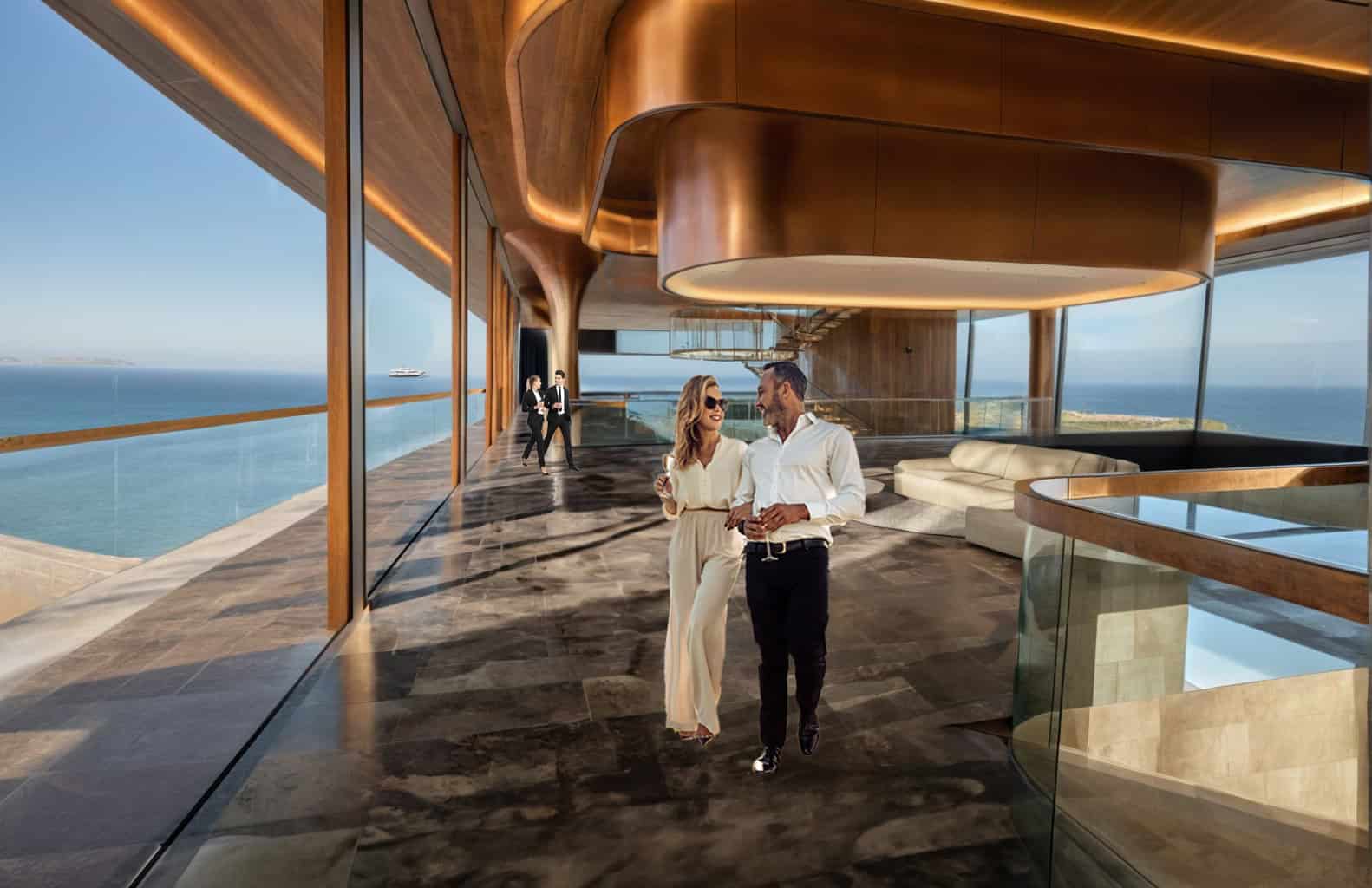
This revolutionary concept reimagines the sport, offering a fully modular, ultra-luxury golfing experience set against a dramatic oceanic backdrop.Picture yourself standing on the green, with the distant hum of passing yachts echoing across the water, sending gentle waves lapping against the platform’s edge. A cool ocean breeze passes through carrying the smell of salt; as players take their shots, birds circle above. Accessible only by yacht, players arrive at a private marina before ascending via a glass lift into a striking clubhouse and driving range facility which uses floating balls that overlooks an archipelago of floating holes. Each hole can be repositioned, allowing for endless course configurations and challenges to suit both amateurs and professionals.
The final hole is a true showstopper: a hybrid structure combining a marine base, a putting green, a clubhouse/driving range facility. It forms the beating heart of the course and promises an unforgettable finale.This project brings together a shared passion for golf with world-class architectural skills and course design expertise. Creating a unique and luxurious experience that also greatly reduces the environmental impacts of creating new courses, using sustainable resources to build the course, allowing the expansion of leisure without clearing forests, wetlands, or converting farmland.Opening the door for the possibility of new courses, especially amongst coastal cities or countries with less available landmass.This game changing course, designed by founder of award-winning
BACA Aquatecture, Richard Coutts, in collaboration with Ben Stephens of PASTE Architects/PASTE Golf Design, marks a breakthrough in the world of leisure and the sheer versatility in their designs. BACA’s concepts introduce a new way to utilise water, embracing it as a partner within the design process rather than a challenge to overcome.