
Interview with Peter Harradine
| News
Estimated reading time 6 min
 You are based in Dubai. What is the state of the golf business in the Middle East?
When the crisis came there were a number of course projects under construction in the Emirates; some were abandoned completely and others simply maintained the holes that were built. There are two part-built courses in Dubai in that state, but I would question whether they were ever sustainable, even in the good times. However, things have definitely improved. They are talking about the new Sheikh Mohammad Bin Rashid City, where two courses are planned, and another course has come up for tender in Dubai. Two years ago the golf course business was dead. It is starting to resuscitate, but it isn’t anything like the scale that was witnessed before the crash in 2008.
Many new courses were planned for the Middle East before the economic downturn, but was there sufficient demand?
No, much of it was commercially unsustainable. The fees were crazy; the construction was crazy. The returns, even in the good days, would never have warranted that type of expenditure. There were courses bringing olive trees in from wherever in the world and all sorts of things – it was just unsustainable. Those are the type of projects that are dormant now and unless they change their approach, they will never be commercially sustainable.
Most of the clubs in the Middle East are high-end, exclusive clubs. Is that a sustainable business model do you think?
The Emirates Golf Club, Dubai, was the first to be built and it was for prestige. All of the others were built to sell houses or to try to make money, but many of them don’t. And they are not going to make money unless some are prepared to go a simpler way. The main problem with the Middle East is water, which takes up a big part of your budget. There’s also the bunkering – you see courses with 10 hectares of bunkers, which costs a lot to maintain. But if you want to make money you have to design courses in such a way that you keep your maintenance costs down. That way you can have affordable green fees and more people playing.
Is it possible to build high quality courses in the Middle East that are also affordable for customers and make money?
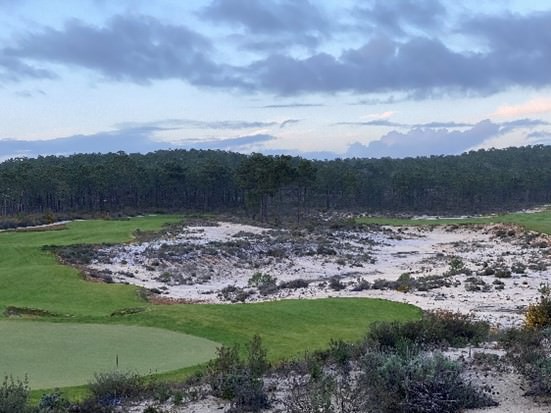
You need more sand and less grass but you can still have a great golf course. Clearly, it’s the manicured model from America that has been adopted here and that costs a lot of money. Interestingly, we persuaded a big developer to change their course from a par-72 to a par-68 and they saw that our argument to reduce the par was correct as we improved the golfing experience and safety for the real estate whilst keeping within the reduced area allotted for the golf course. It doesn’t always have to be a championship course. It not only reduced their maintenance costs, it also allowed them to increase their real estate, so it proved beneficial for all.
Would golfers accept playing on less manicured courses?
Personally, I think golf has to go back to what it was before, like the courses of Scotland and England. It doesn’t look so tidy, but I prefer edges that are not trimmed and precisely cut – it’s a more natural look. By the way, the ecologists hate us for that manicured look. I wouldn’t mind if the press didn’t talk about those courses – as long as the players got out there and have an enjoyable game, I would be satisfied.

You have two courses under construction in Egypt. What’s the latest update there?
Both of our supervisors stayed there during the unrest. Construction stopped for two or three weeks, but that was it, we kept on going. At Al Marassi we have nine holes opening in August and they are selling villas on the coast.
Our other project, Uptown Cairo, is going to be a spectacular course. Even there we never really stopped construction and five holes are grassed now. A lot will depend on the real estate, which is probably not being sold as fast as it would have done before the crisis. Saying that, there have been many enquiries from ex-pats who have bought villas on that site.

You have a presence in Central and Eastern Europe. What prospects are there for growth in these regions?
We currently have five jobs in Eastern Europe, including a new job we have just signed for. It is a new market and unfortunately, in my opinion, the golf courses there are being built for the wrong reasons. They are mostly real estate projects and up to 90% of the home buyers don’t actually play golf but want to be associated with it. The reality is that we need young people to play golf, it needs to be part of the curriculum in the schools and unfortunately most real estate courses don’t produce enough players. However, real estate courses give us a lot of work and we are very happy to do these jobs; I’m definitely not against them. But, for the overall good of the game and business, we need more people to be playing golf in the developing golf countries.


Do you have any other observations on the state of the golf market?
Our practice had 47 projects before the downturn and seven full-time architects. It was an incredible time. But I think the market has normalized now. I do think we have to think more about municipal courses and nine-hole courses, and think more about the image of golf. In Switzerland, every time we have a local referendum for a new course it is declined because golf has a bad image, but golf is a great game and everyone can play – children, parents, and grandparents.

Golf is sometimes associated with selfish capitalism, but that’s not true. My son plays for $15 at the weekend in the States. It’s fine to have exclusive, upmarket clubs, but we also need more short courses, more pitch and putts. I think there could be a great future for golf, but we need to change our public image, otherwise golf will die.
This article originally appeared on KPMG’s Golf Business Community website, July 2013 – www.golfbusinesscommunity.com