Golf’s positive impact – stories of community, nature, and a sustainable future at the EIGCA Conference
| Annual Meeting, Bruce Charlton, Caspar Grauballe, Christian Lundin, GEO Foundation, Matt Schiffer, Sam Thomas
Estimated reading time 4 min
Golf is more than a game — it is a powerful tool for community development, environmental stewardship, and social inclusion. That message rang loud and clear during the EIGCA Conference in Scotland in May 2025. Golf course architects shared stories from around the world that showcased how golf is rising to meet the demands of a changing world.
Setting the scene: Why this matters
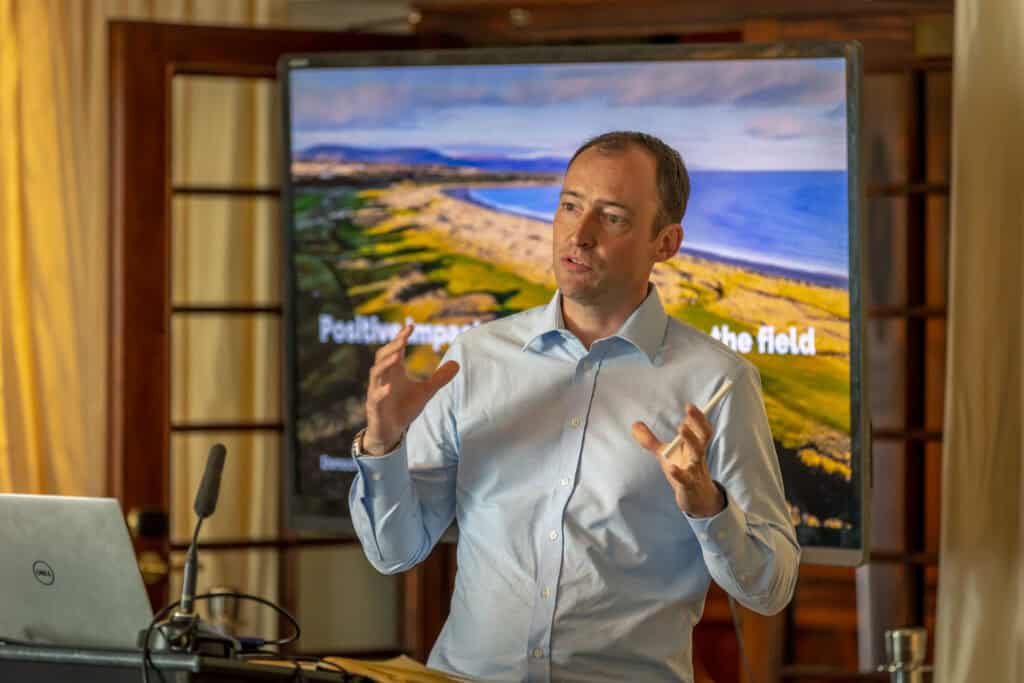
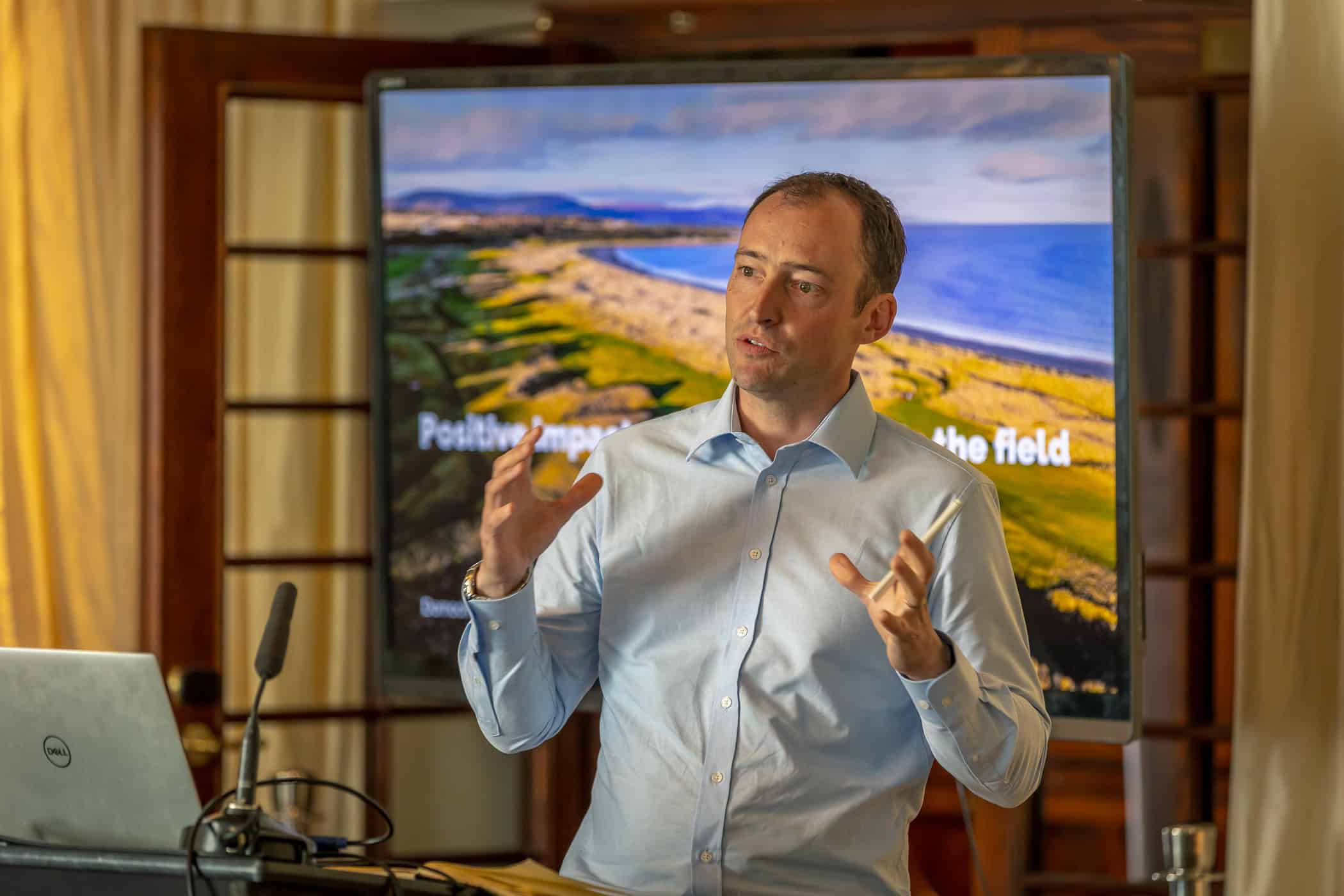
Golf projects today face a complex web of challenges: environmental regulations, political scrutiny, public perception, and the need to serve local communities. Sam Thomas, GEO Foundation, led the session and emphasised the importance of sharing real stories — from on-the-ground innovation to big-picture strategy — to change how people view golf and highlight the good it can do for both people and planet.
With golf covering large swathes of land globally, the industry has a responsibility — and a unique opportunity — to lead on sustainability and community engagement. The session brought this to life with compelling examples from across the world.
Real-world stories of golf’s positive impact
Bruce Charlton MEIGCA and Mike Gorman ASGCA – Hoiana Shores (Vietnam)
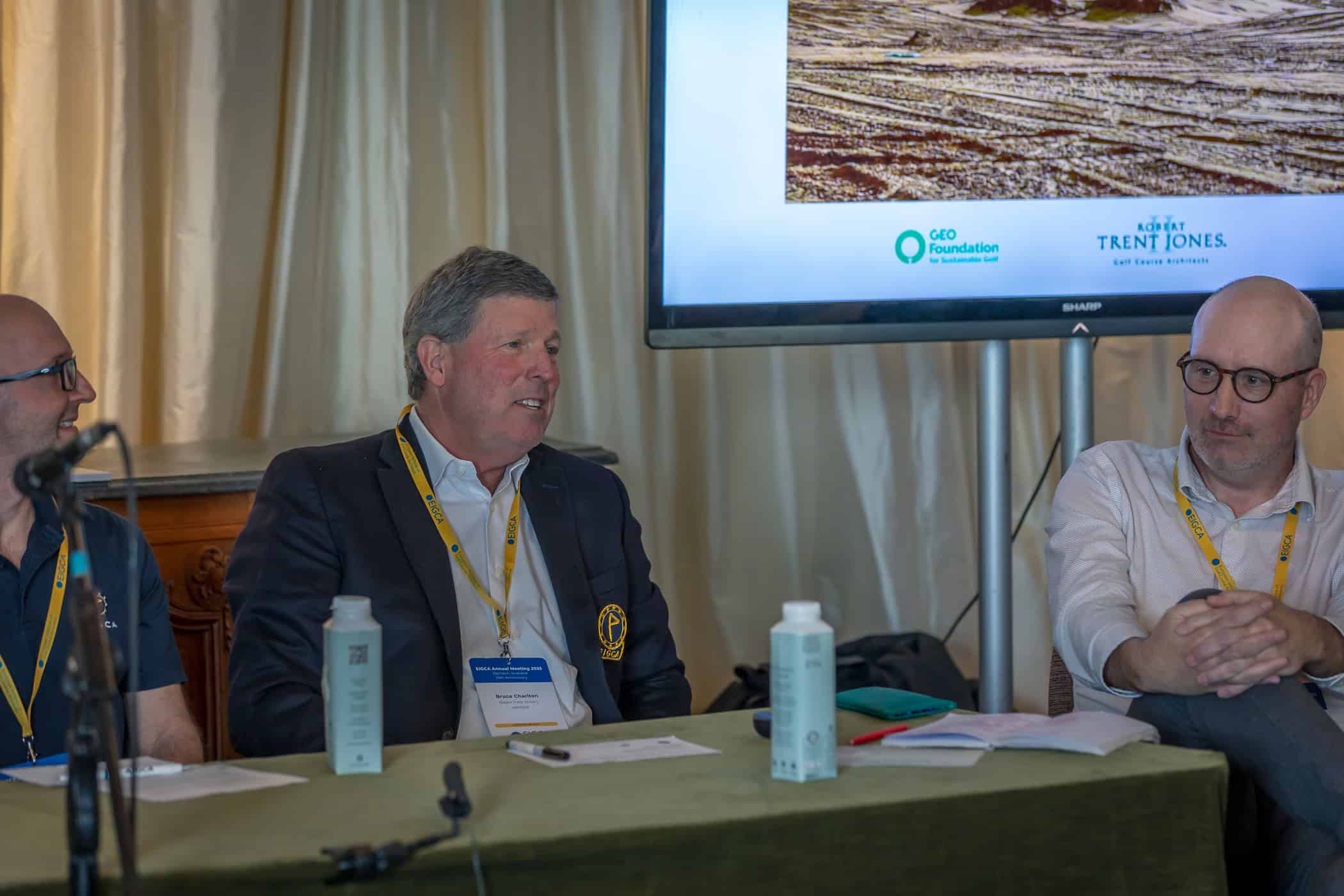
Bruce and Mike shared their experience building a golf course in a remote Vietnamese landscape. Despite the logistical challenges, they embraced native sand, local materials, and innovative irrigation to reduce the environmental footprint. Their work not only preserved the surrounding ecosystem but brought new life and economic opportunity to the area.
Matt Schiffer MEIGCA – Old Bridge Golf Course (New Jersey, USA)
Matt faced serious environmental challenges, including water management and protected habitats. Sustainability was prioritised from the start, resulting in a costly but forward-thinking network of subsurface pipes to protect sensitive wetlands.
Christian Lundin MEIGCA – Crownwood (Sweden)
Christian highlighted how the new Crownwood Club became a model for social integration. The club offers free golf to local juniors, supports para golfers, and has been able to rehabilitate a previous Christmas tree plantation into a native dune and coastal grassland habitat with a world class golf course.
Caspar Grauballe MEIGCA – Trump Turnberry (Scotland)
Caspar encountered heavy resistance from environmental activists and the local community. While acknowledging the challenges, he also highlighted the economic benefits the project brought to the region — reminding everyone that even controversial projects can have meaningful local impact when done thoughtfully.
Navigating challenges with transparency and trust
Several stories shared during the session focused on the role of communication in reducing opposition and building support. In France, for instance, one project faced sabotage threats so serious the French Secret Service became involved. Another neighbouring course had paint poured on its greens.
The takeaway? Better communication, transparency, and community involvement can turn critics into allies. The panellists suggested inviting environmentalists onto project sites, sharing biodiversity data, and focusing on trust-building over time.
Quantifying golf’s environmental value
There was strong agreement that golf needs to prove its environmental contributions with data. The idea of biodiversity net gain — ensuring a site is better for nature after a project is completed — was widely supported. The panellists called for industry-wide surveys to track and quantify improvements in habitat, species richness, and land health.
Daniel Lightfoot of The R&A commentated how this aligns with The R&A’s Golf Course 2030 research initiative, with funding available for research projects that commit to helping golf measure its positive impact.
Turning golf into a story worth telling
Whether it is building wildlife corridors, creating green jobs, or integrating cultural heritage into course design, golf has a story to tell — and it is time to tell it better.
Attendees shared strategies for positive storytelling, including:
- Using social media to spotlight local benefits.
- Hosting community events to break down barriers.
- Empowering local ambassadors to be the voice of golf.
- Focusing on real stories of inclusion, nature, and sustainability.
Consistency in messaging, connection to the local community, and real action — that is how to shift perceptions.
Golf is more than a sport. It is a community builder, a green space protector, and — increasingly — a partner in sustainability.