Get to know EIGCA Affiliate, Adrian Mortram
Estimated reading time 3 min
Trekking in the Land of the Thunder Dragon
Bhutan is a small kingdom in the Himalaya sandwiched between Tibet (China) to its north and India to its west, south and east and is often referred to as the Last Shangri-La. It is home to high, snow-covered mountains (the majority of them unclimbed), extensive forests, Buddhist monasteries, snow leopards, red pandas, takin (the national animal) and a variety of trekking routes. Bhutan is also one of only a handful of countries in the world who are carbon neutral, indeed it absorbs more carbon than it emits, and Gross National Happiness is more important than Gross Domestic Product.
It was the trekking that drew us to Bhutan, specifically The Snowman Trek which is widely regarded as one of the toughest treks in the world due to its duration, altitude and number of high altitude passes to cross (11 in total). The failure rate on the Snowman Trek is 50% and apparently more people have climbed Mount Everest than have completed the trek. The window for trekking in Bhutan is very small – post monsoon and prewinter before the risk of snow making the passes impassable arises – so in early October we headed out to start our attempt.
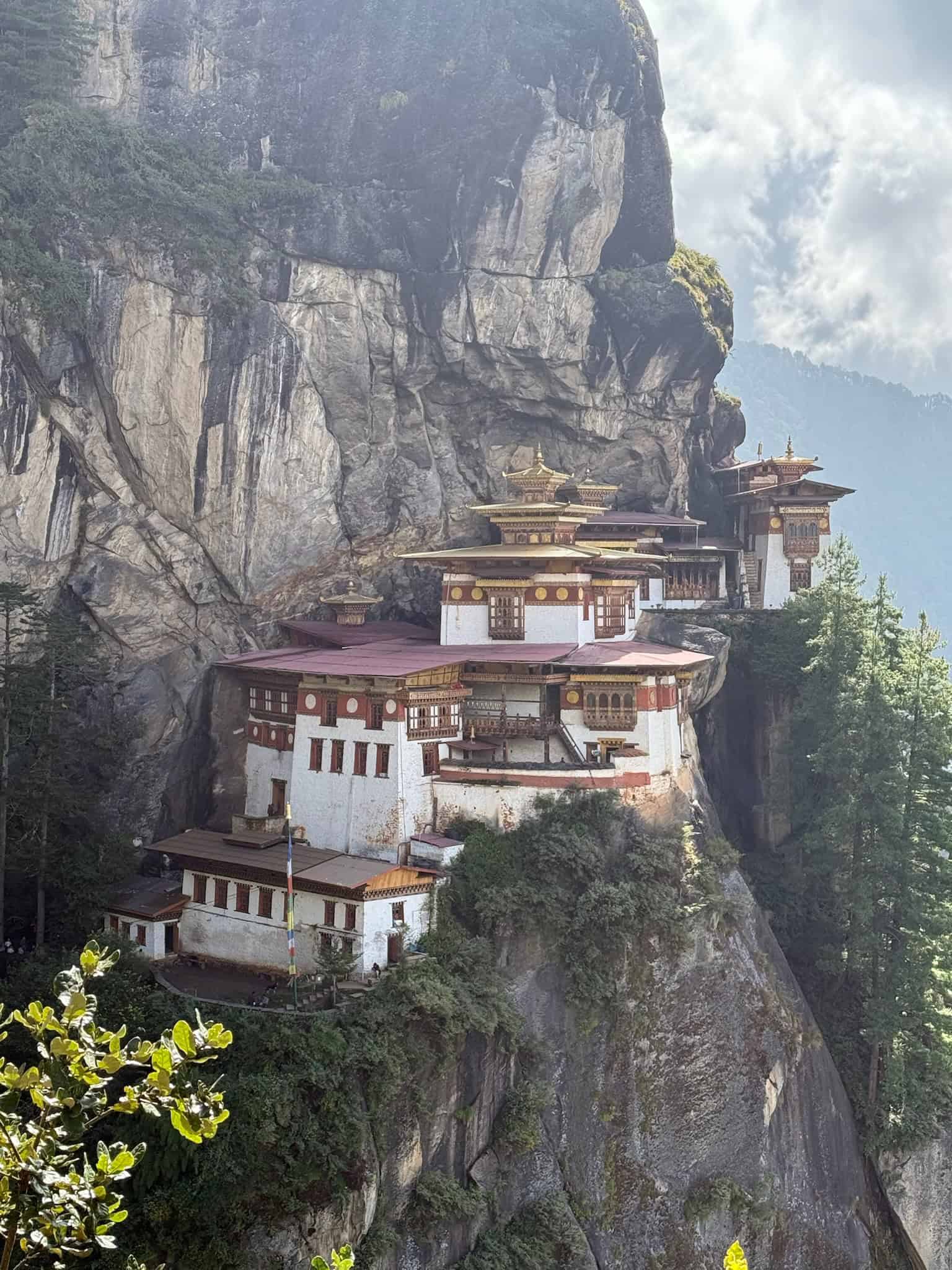
Our first stop was the Tiger’s Nest Monastery. If you have seen any pictures of Bhutan chances are you will have seen the monastery perched precipitously on a cliff high above the Paro valley. It is an incredible building and it is truly wondrous how it was constructed as it is only accessible by foot up a very steep cliff path.
The following day after a puja (good luck) ceremony carried out by a local lama (Buddhist monk), we started our 24-day adventure. We initially walked through beautiful forests of oak, juniper, spruce, pine, rhododendron, azalea and old man’s beard as we started to climb out of the valley. The autumnal colours were sublime in the sunshine. 70% of the land in Bhutan is covered with forest and their constitution states that this will not fall below 60%.
Over the next few days, we climbed slowly until we reached Jhomolhari Base Camp where we spent two days to acclimatise and to visit the Jhomolhari Mountain Festival where the people from local villages gathered to take part in traditional dancing, singing and sports such as pillow fighting, tug-of-war, pony racing and a form of darts.
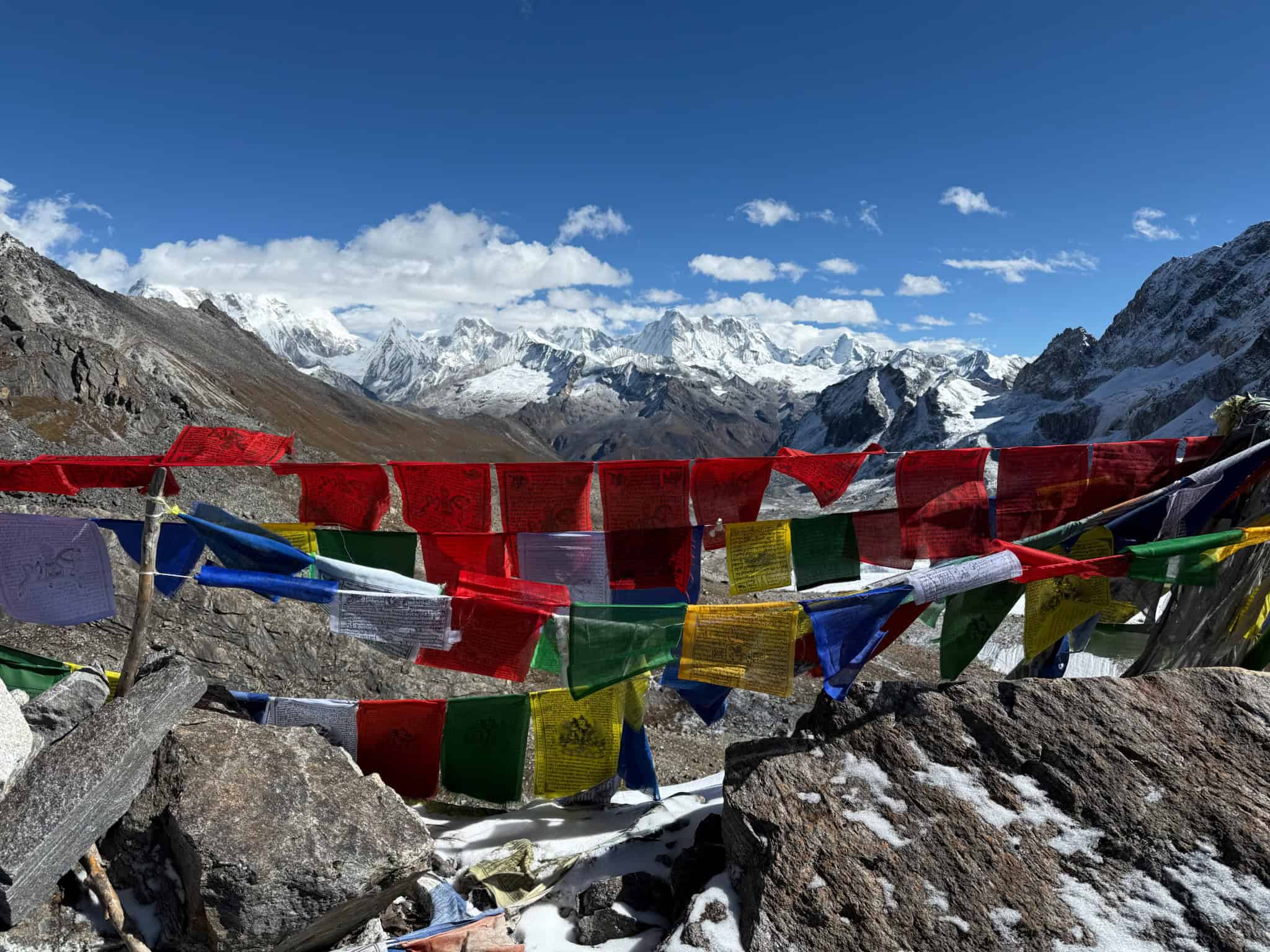
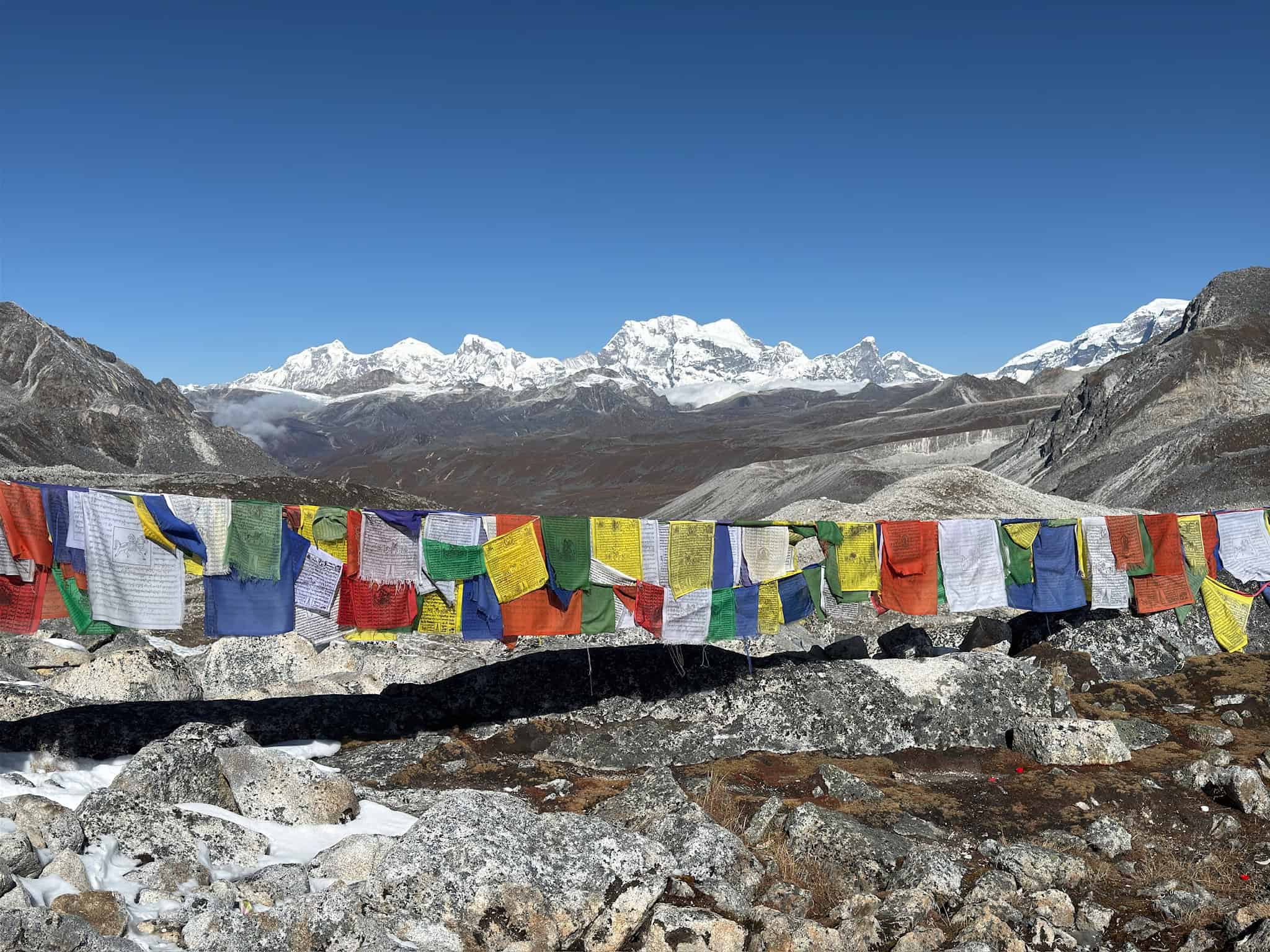
After leaving Jhomolhari Base Camp we trekked for a further 19 days over mountain passes which were all over 4600m high. The highest pass was 5300m. We were surrounded by magnificent snow-covered mountains, we passed beautiful glacial lakes and visited isolated villages only accessible by multi-day walks on foot, or by helicopter. Some of these villages are completely cut off during winter when the snow arrives so the residents must be very self-sufficient. We also visited remote Dzongs (forts and monasteries). The terrain underfoot was very difficult most of the time– none of your neatly prepared trails here – and we had to concentrate at every step to avoid slipping or tripping. As we went over one of the high passes, we spotted snow leopard prints in the snow which was exciting but unfortunately (and unsurprisingly) no sighting of the elusive leopard itself.
A challenging trek in an interesting and beautiful country but certainly not for the fainthearted!